

Trainr is a dog training app that makes training feel less like a chore and more like fun for both dogs and their owners. It offers simple, step-by-step sessions that owners can easily follow along with on their phones.
The idea came from my own experience trying to find helpful dog training resources and feeling overwhelmed by where to start. I wanted to see if other dog owners felt the same way, so I interviewed five dog owners with different levels of training experience. Most shared similar frustrations: too much information to sort through and not enough time in the day to put it into practice.
From there, I started bringing the idea to life, working on everything from the branding to the app's screens and interactions.
Trainr
The app
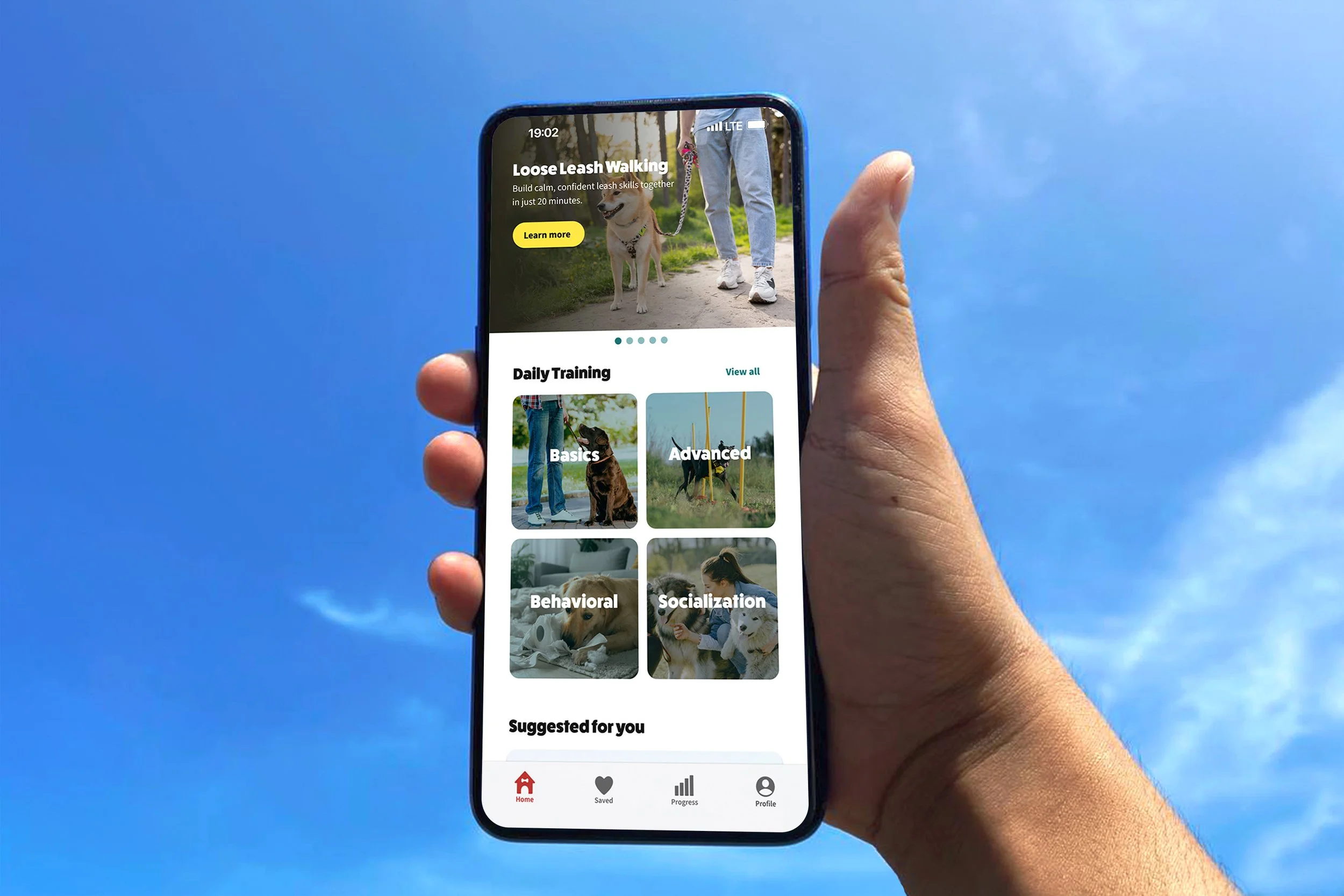
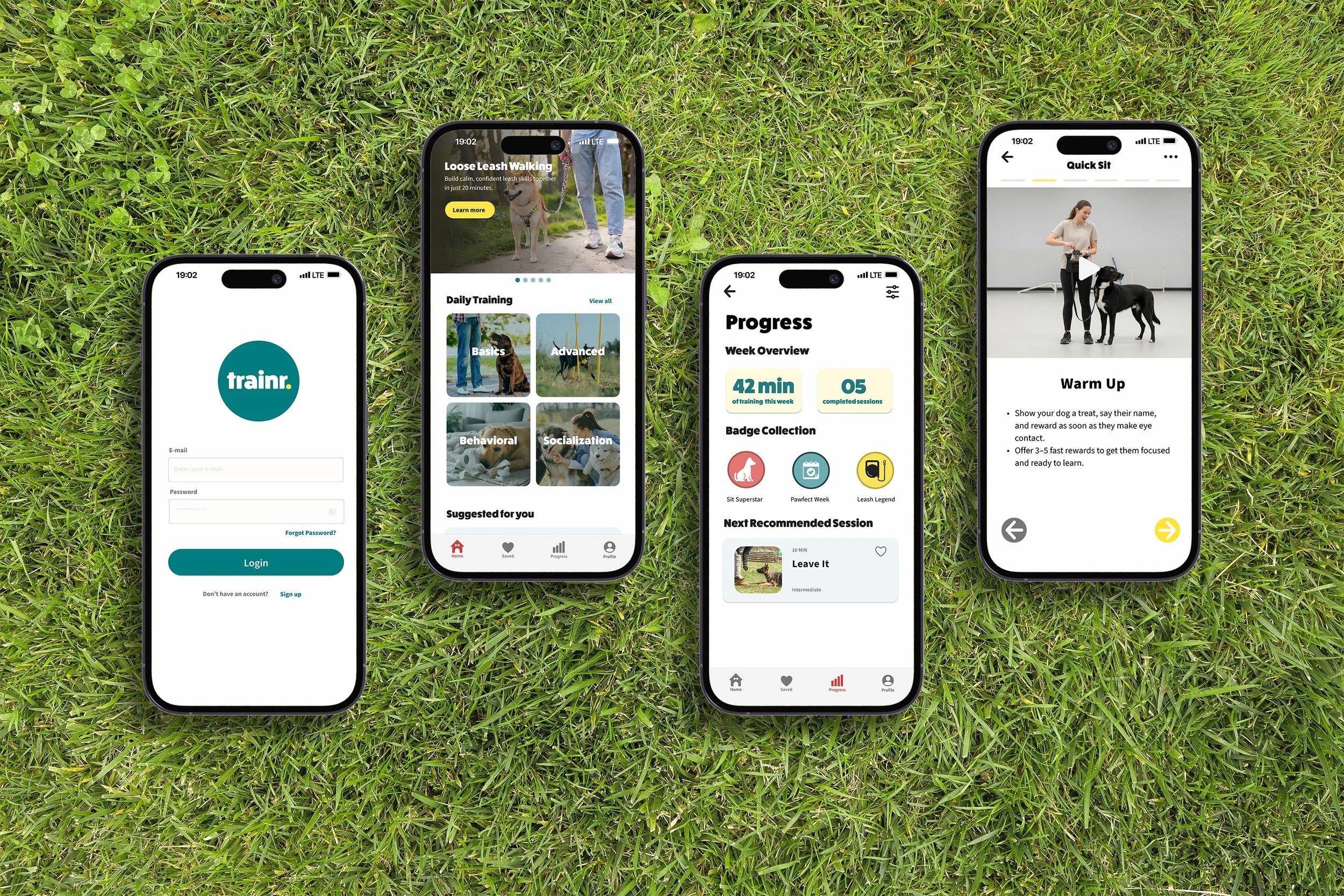
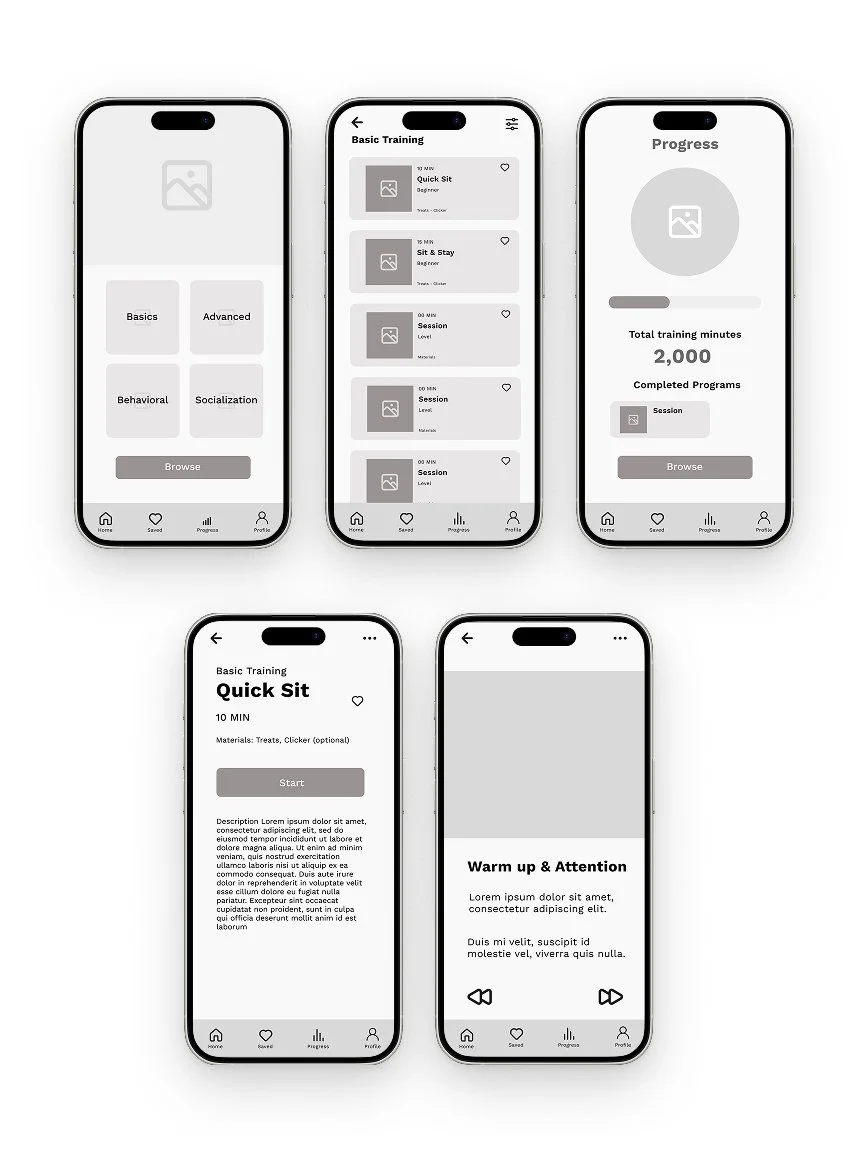
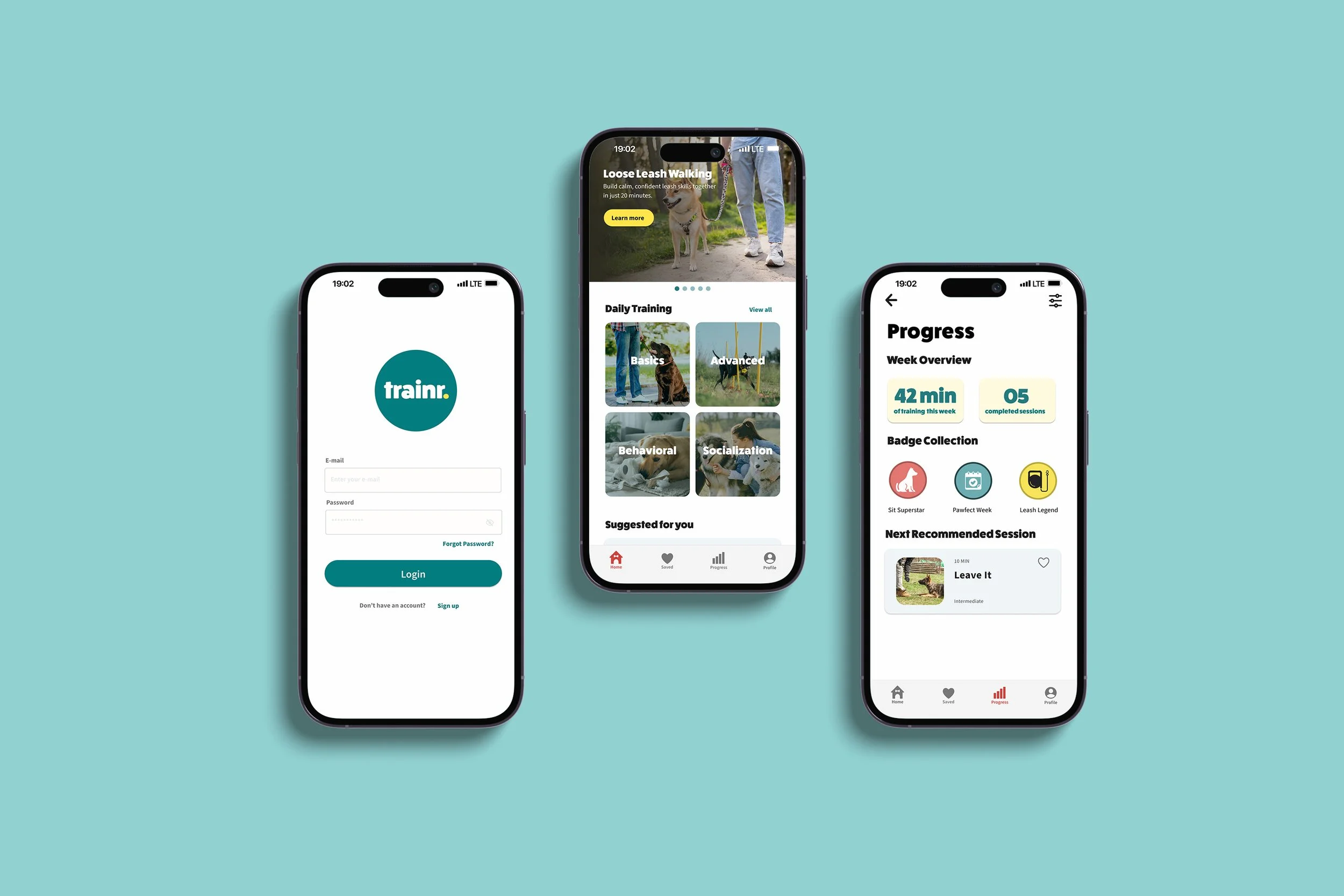
Trainr works a lot like a workout app. You start by choosing what you want to work on, whether it's basic commands, behavior, or socialization. From there, you can narrow down sessions based on time, skill level, and the materials you have available. Sessions are short and easy to fit into a busy day.
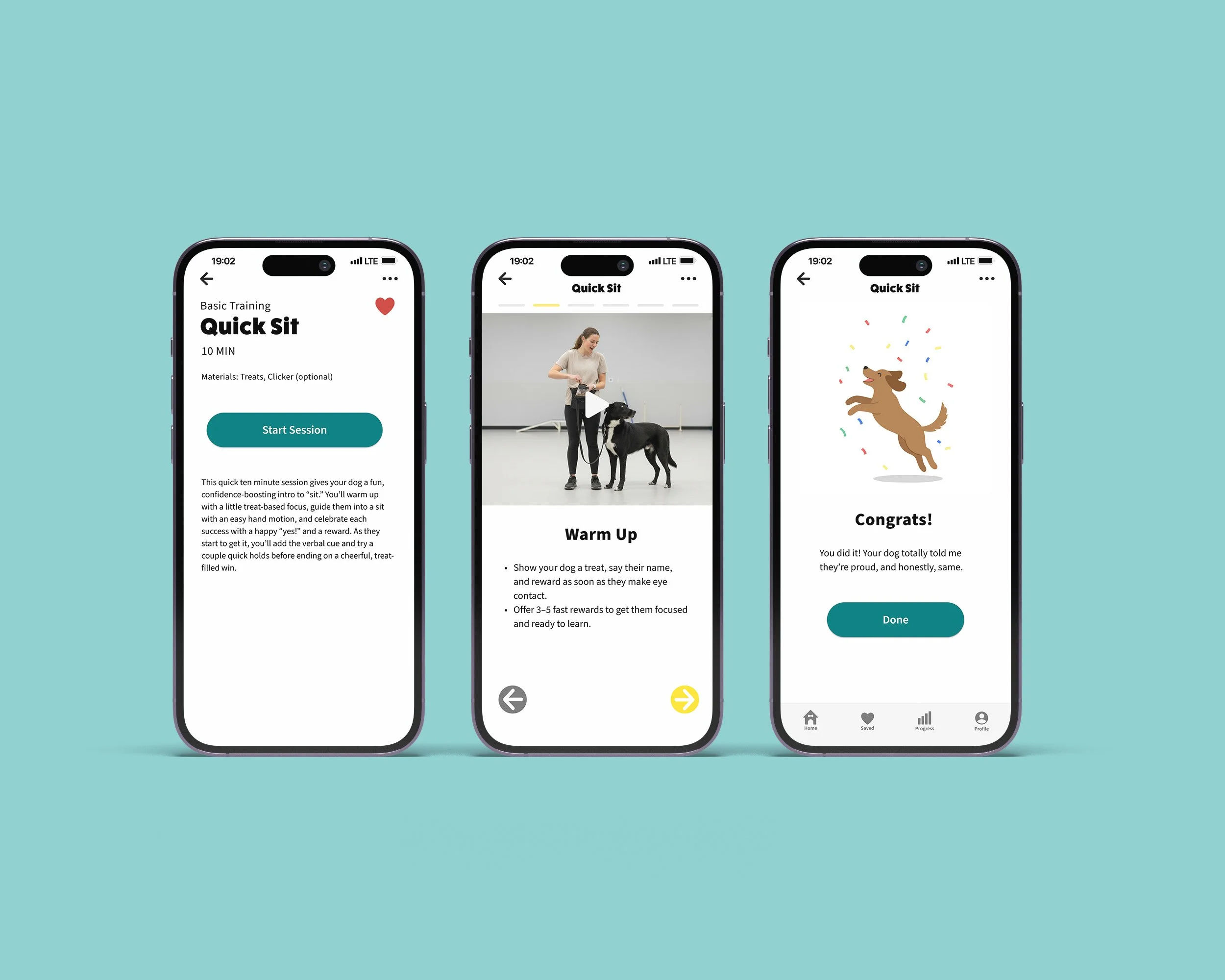
Each session guides you through the training one step at a time, with video demos you can follow along with right from your phone. Your progress page keeps track of all your training and the badges you've earned along the way.
Visual Identity


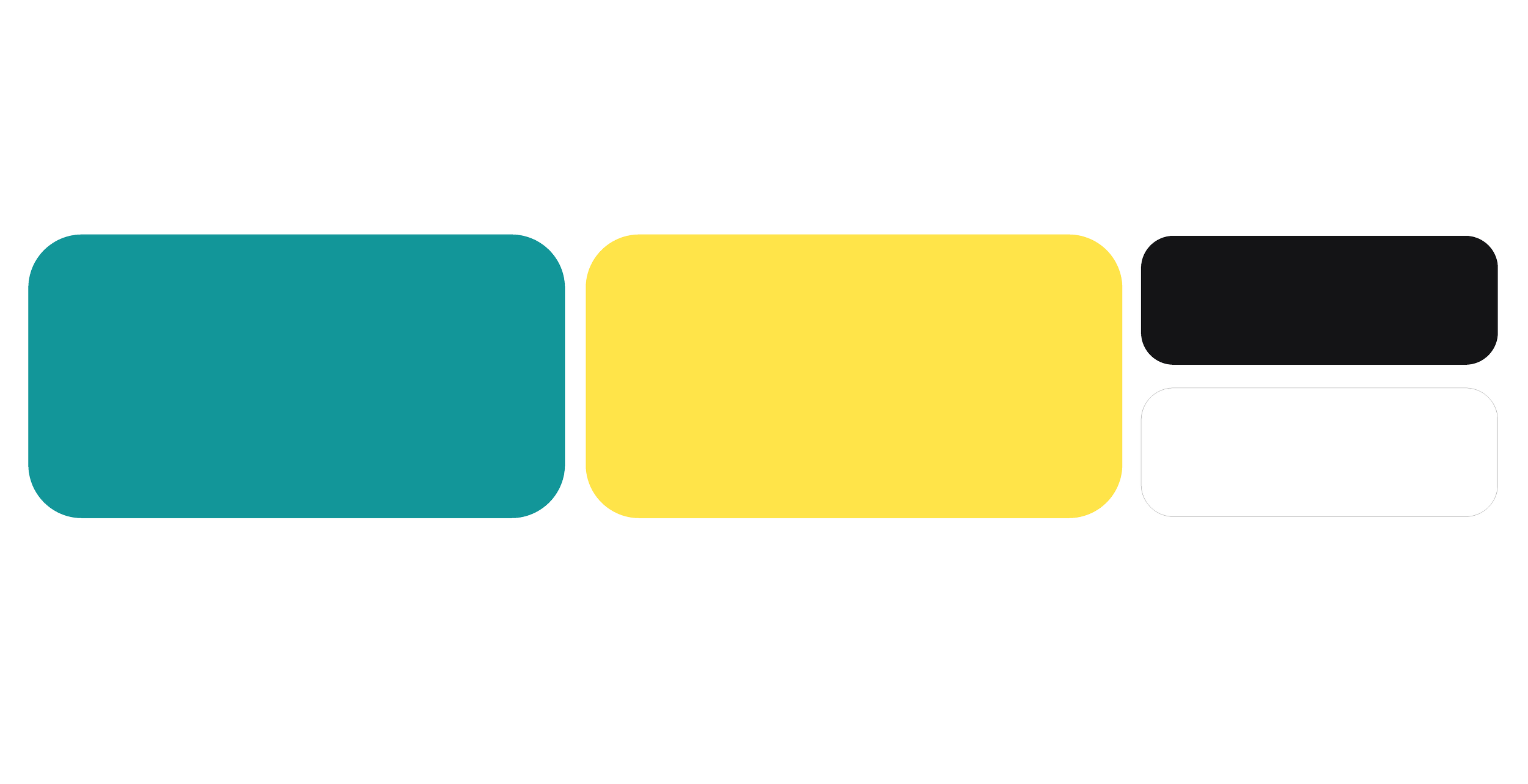
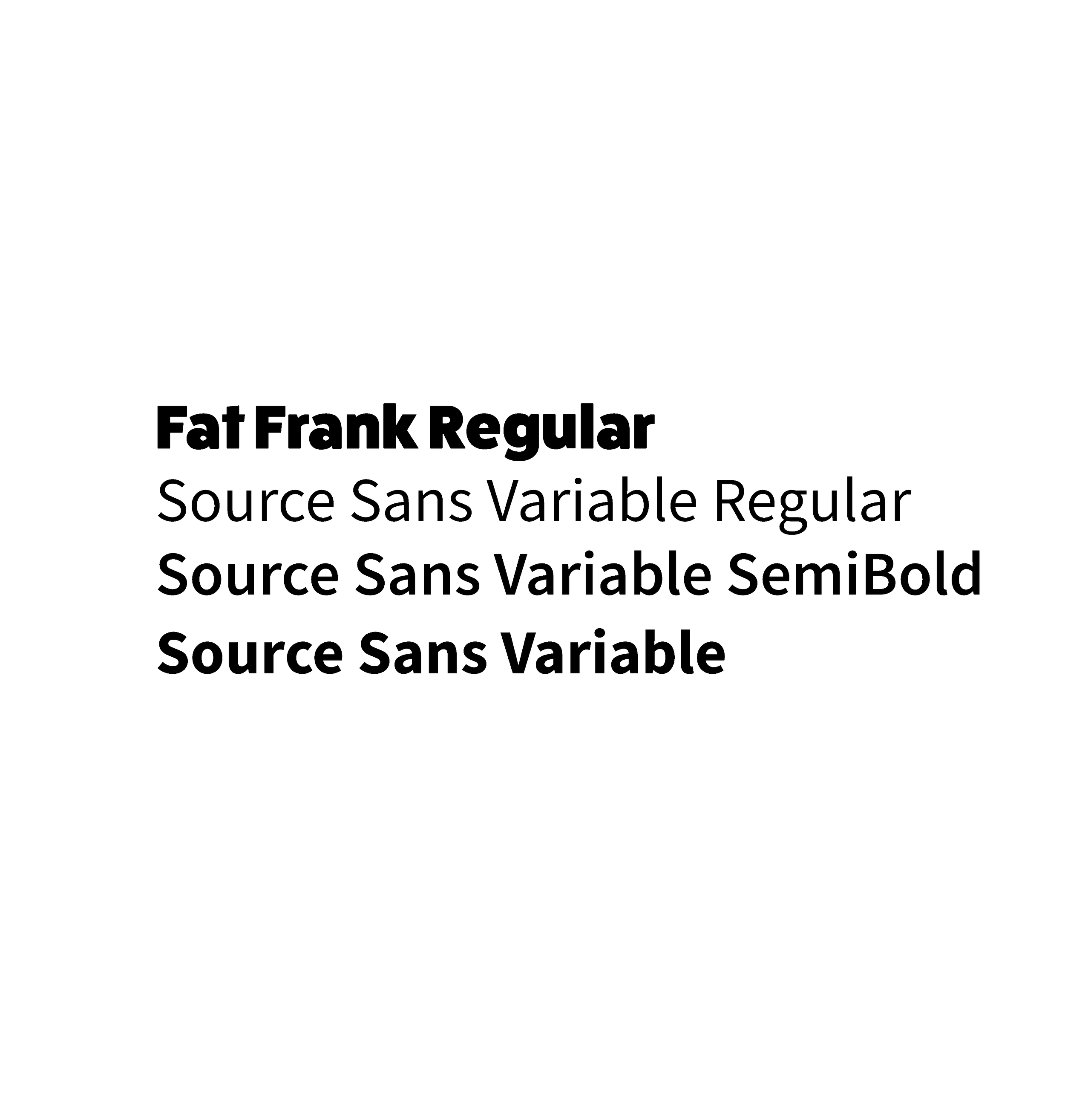
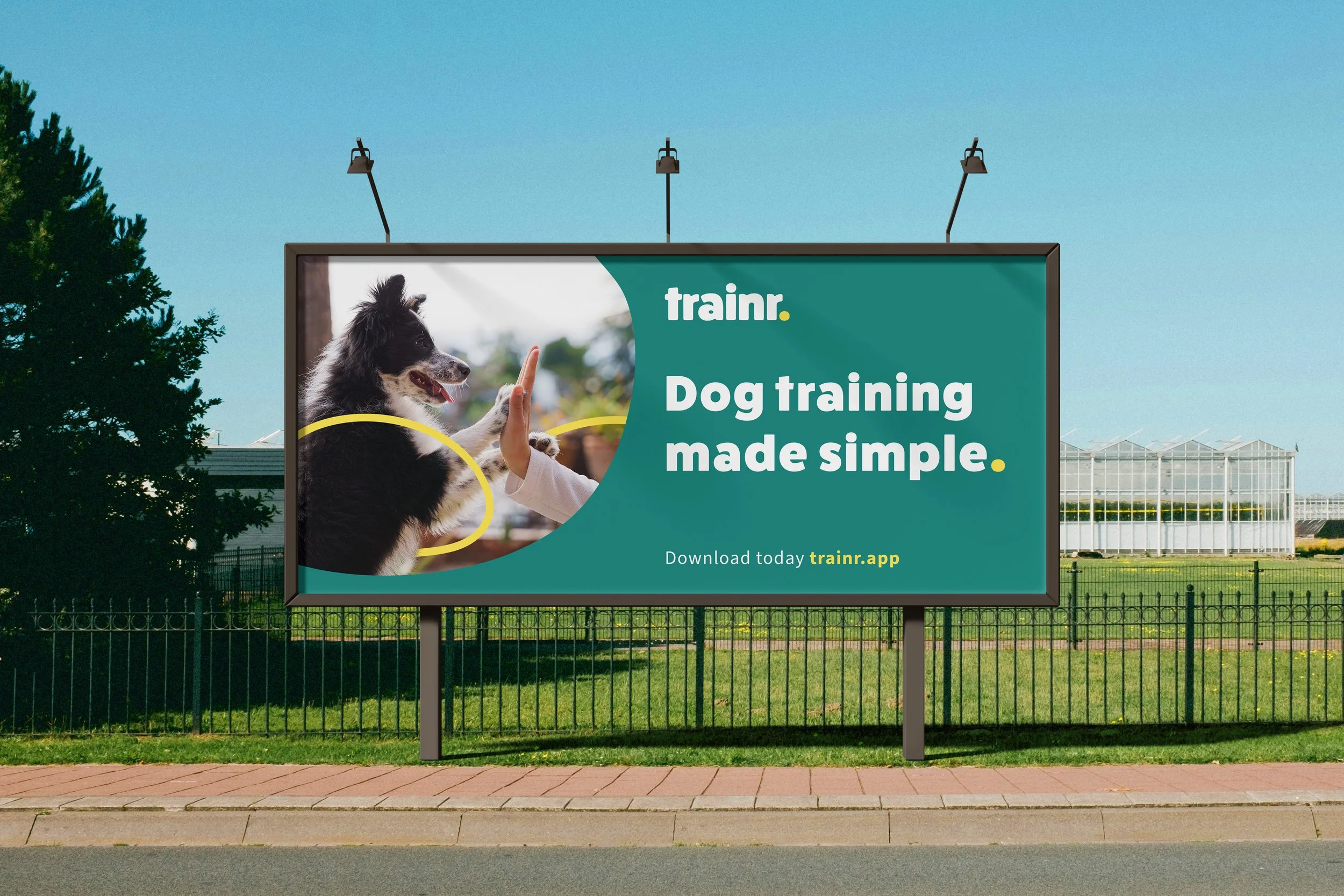
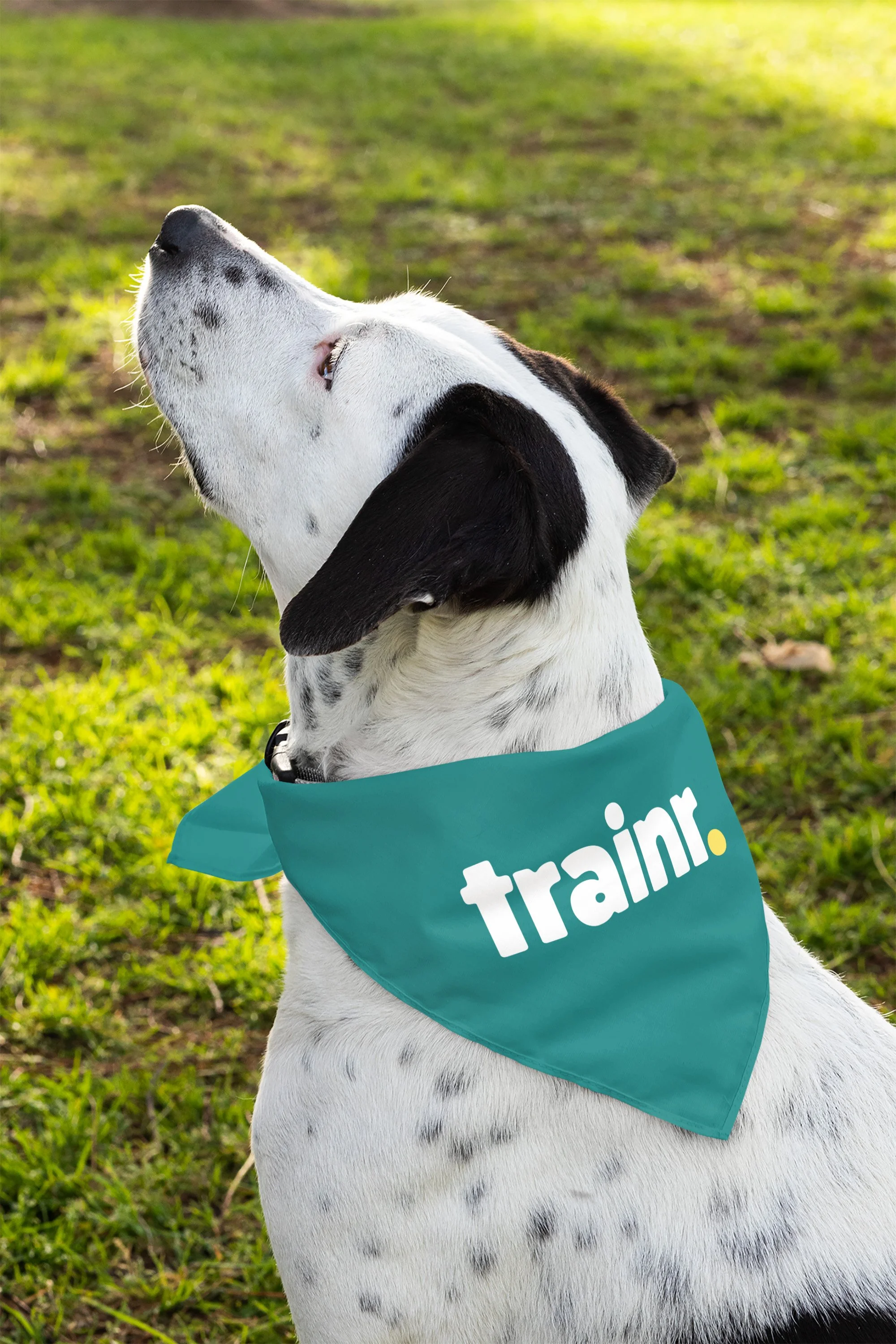
Trainr’s identity is friendly, encouraging, and a little goofy, just like the dogs it’s made for.
The yellow dot takes inspiration from the classic tennis ball, a favorite among dogs, and serves as a reminder that training should be fun.
The challenge
Here’s what I found:
YouTube and social media are the main training resources
Time and routine are common challenges
Training information feels inconsistent and unreliable
Few people use or know about training apps
Strong interest in personalized plans, progress tracking, and flexible sessions
Research
When I tried to find good dog training resources, I found plenty of information but no clear place to start. I wanted to know if I was the only one, so I interviewed 5 dog owners with different levels of training experience. I asked about:
Their background and daily lives
Their training routines and goals
The resources they use and challenges they face
Their experience with training apps and what they’d expect from one
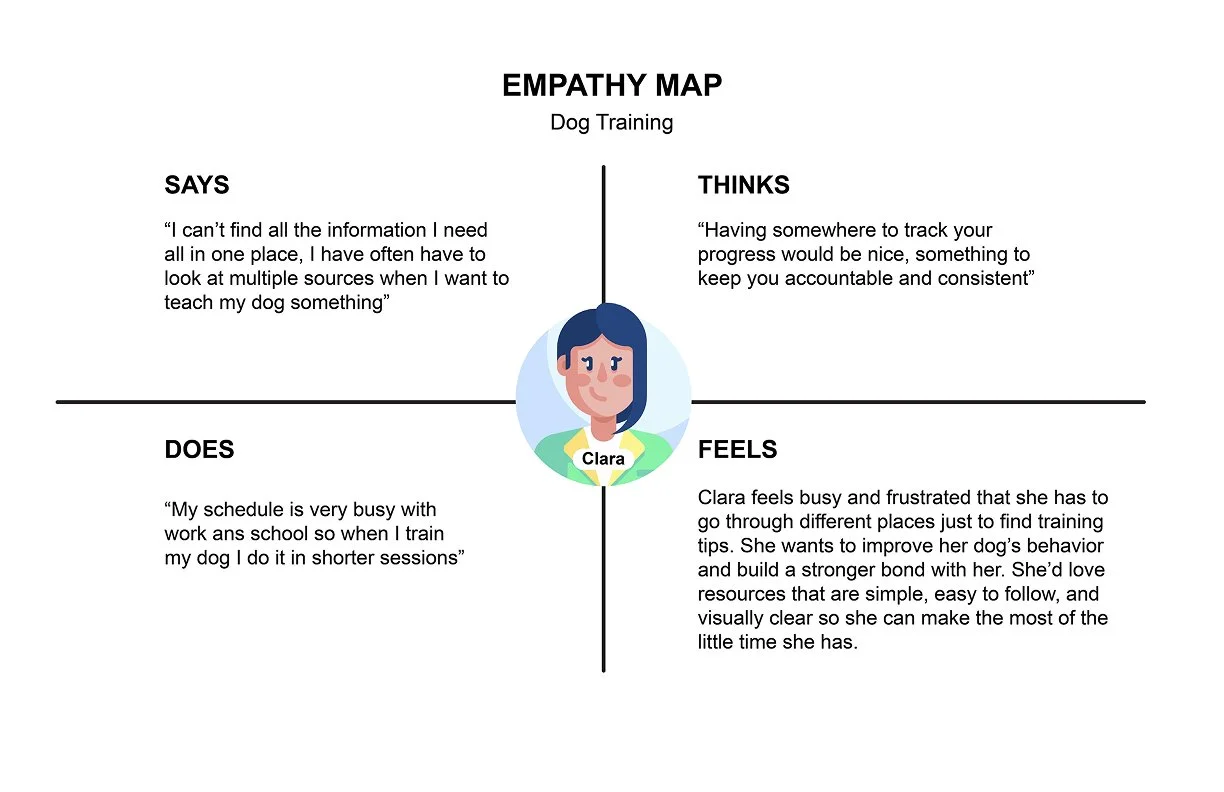
Who I designed for
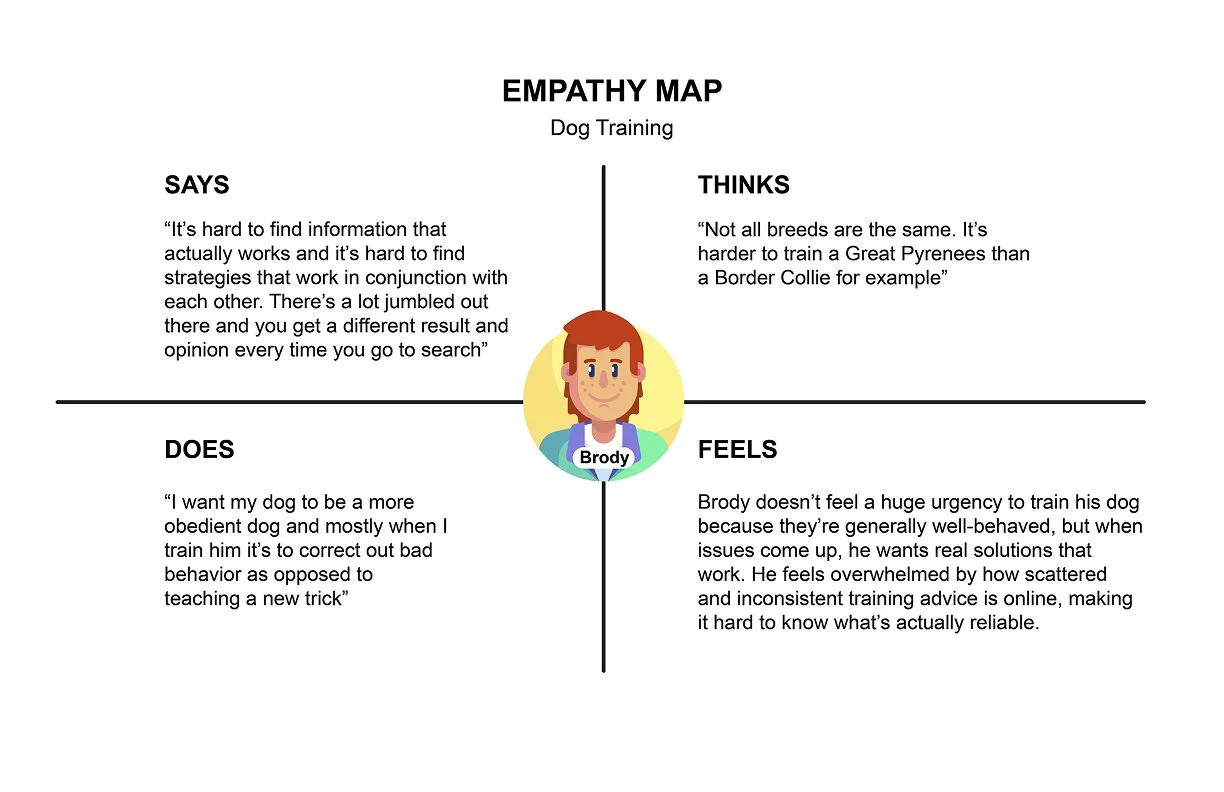
Three personas came out of the interviews:
Busy Beginner (28, administrative assistant)
Wants quick, effective training from one reliable source, and to track progress.
Struggles with: limited time, scattered information, and guilt when inconsistent.
Overwhelmed Owner (23, dog walker)
Wants breed-specific guidance, to build confidence, and affordable, supportive tools.
Struggles with: feeling discouraged when their dog doesn’t respond, and thinking apps are too expensive.
Experienced Trainer (30, creative director)
Wants advanced obedience, a personalized plan, and clear milestones.
Struggles with: conflicting advice, not knowing what applies to her dog, and hard-to-measure improvement.
Problem Statement
“Dog owners need a place to access centralized, reliable, and personalized dog training resources to make dog training easier and more effective”
Design Goals
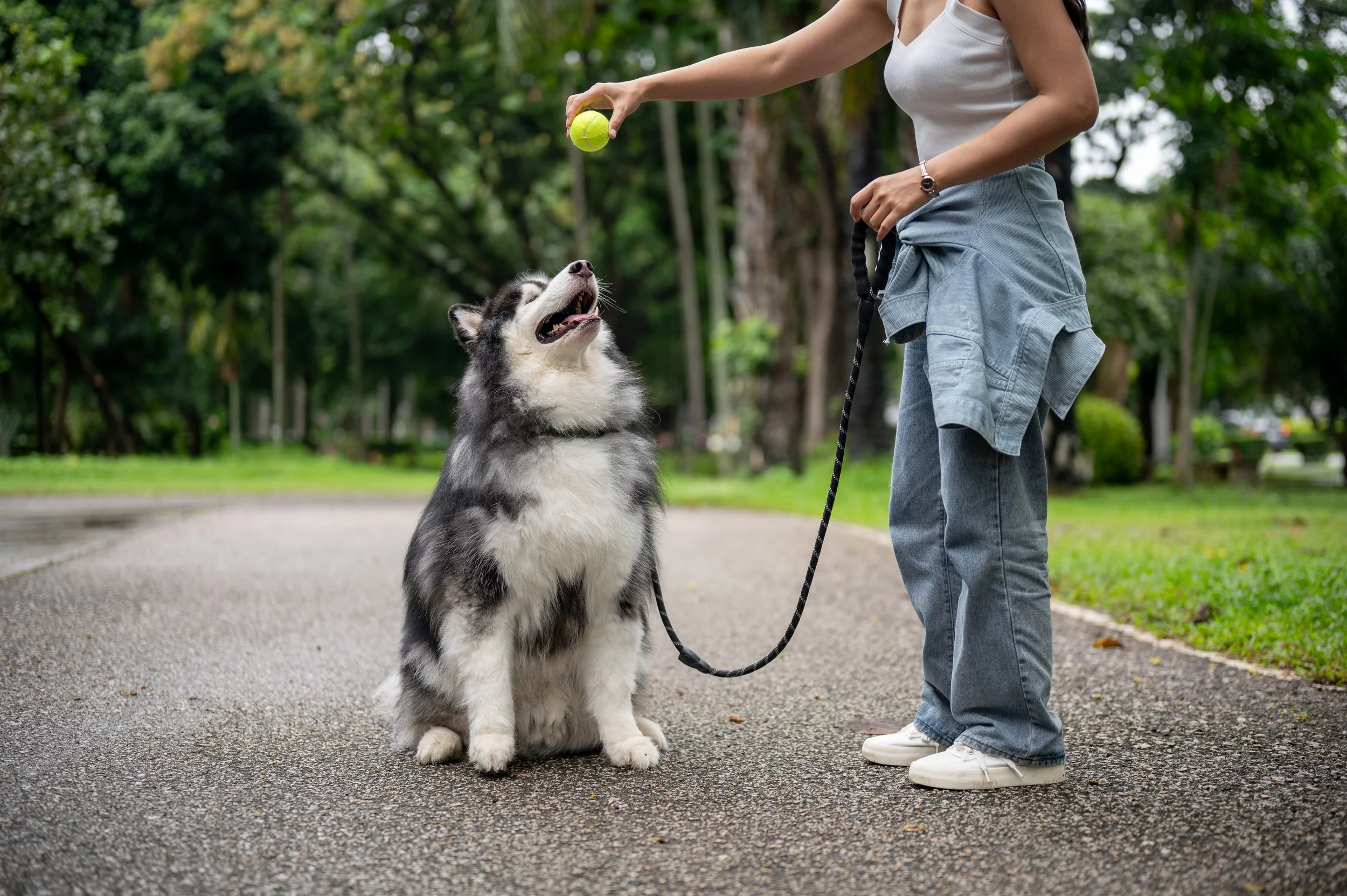
Those findings became three goals for the app:
One reliable place to train
Clear, trustworthy guidance in one spot instead of scattered across videos and posts.
Short, flexible sessions
Training that fits into a busy day, at any skill level.
Visible progress
A way to see how far you and your dog have come, so it’s easy to keep going.
From sketches to testing
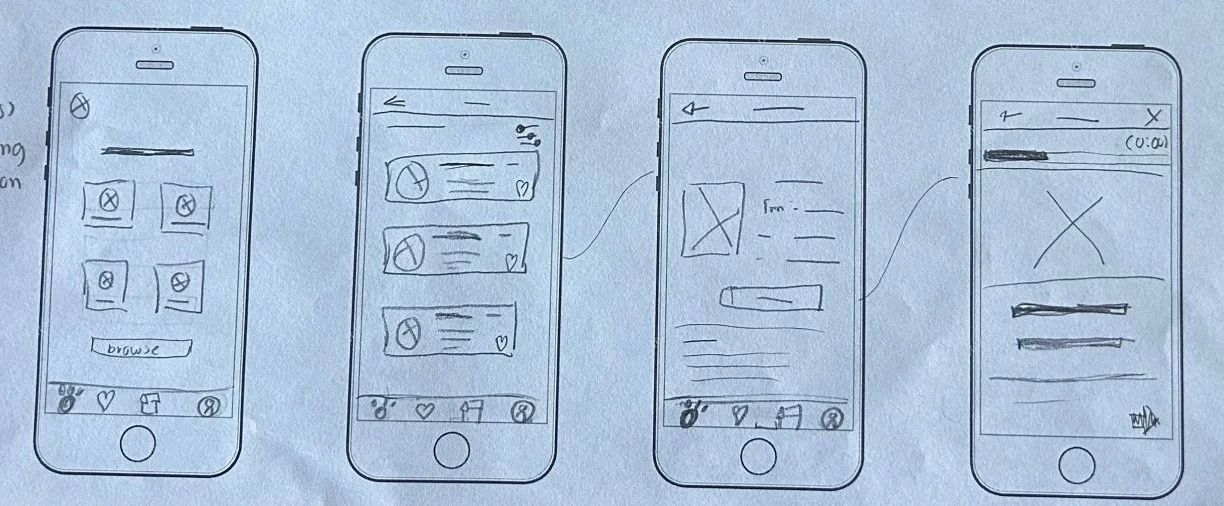
I mapped out four flows (setting up an account, completing a session, checking progress, and seeing saved sessions) and sketched them on paper first. Testing those sketches showed two things:
A quiz makes signup easier by breaking the form into manageable steps
Full training programs, not just single sessions, would encourage people to come back
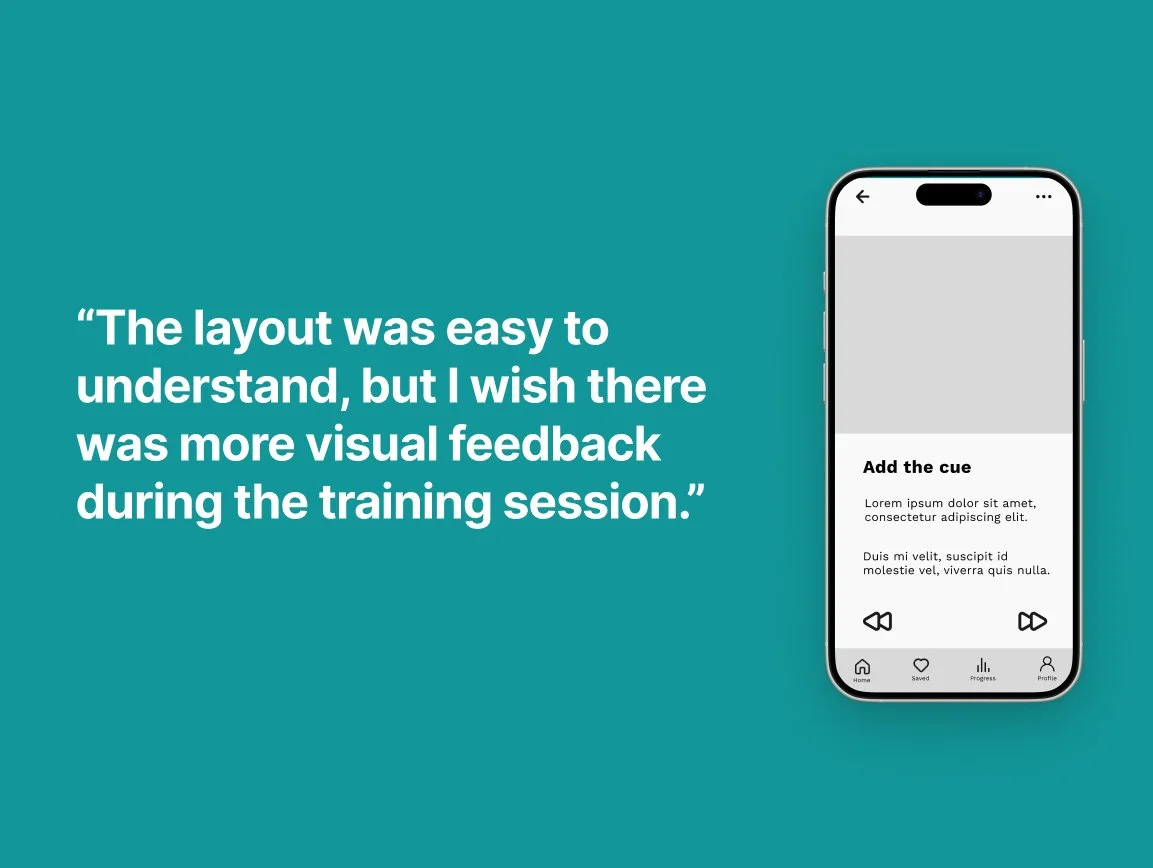
Next I built a mid-fidelity prototype and tested it with 5 people on three tasks: signing up with the quiz, completing a session, and checking progress. People found the layout easy to understand, but their feedback pointed to a few areas to improve:
Clearer visual feedback during training sessions
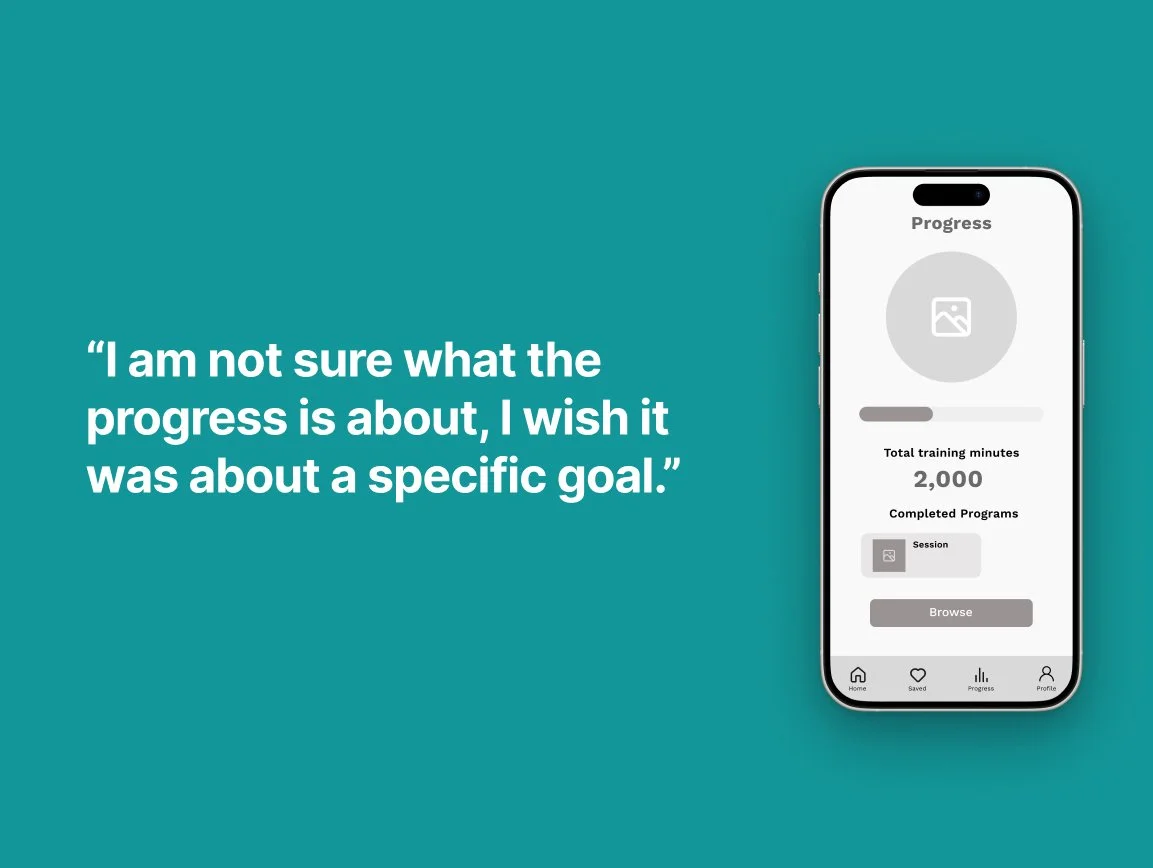
A more meaningful progress page
A smoother, less confusing end to each session
I used these insights to refine the flow, the navigation, and the progress experience, so the app feels clearer and more rewarding to use.
The solution
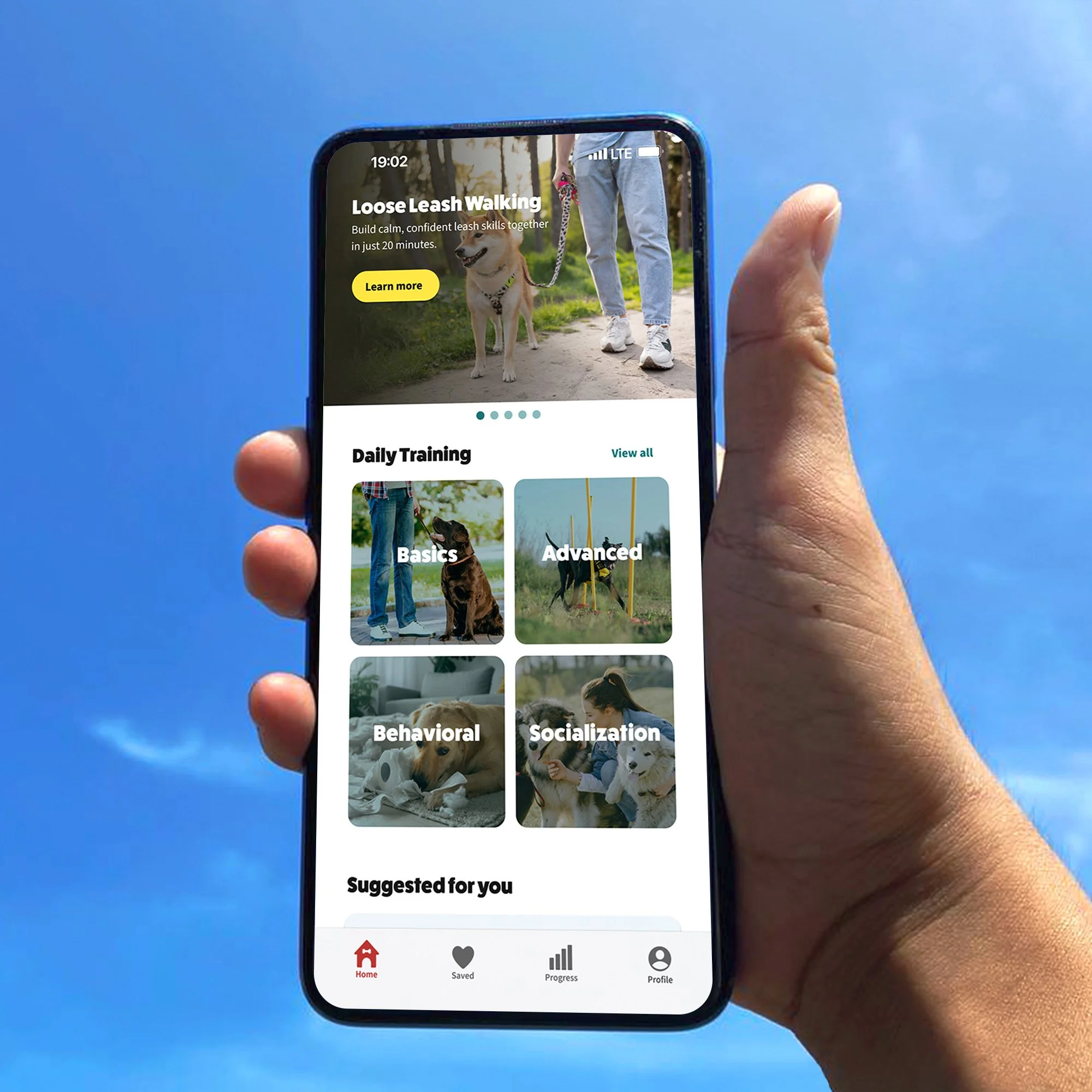
With those changes in, here’s where Trainr landed. It works a lot like a workout app, and the experience comes down to three moments.
Choose
Pick the type of training you want to work on, like basics, behavioral, or socialization, then narrow it down by time, skill level, and the materials you have on hand. A short quiz at signup collects your dog’s info and the commands they already know, so recommendations fit from the start.
Train
Each session walks you through one step at a time, with video demos you can follow right from your phone, and ends with a little celebration for you and your dog.
Track
The progress page shows your training time and completed sessions for the week, along with badges to earn and a recommendation for what to try next.